2010 Keynote Speaker
'Smallpox -- The Death of a Disease'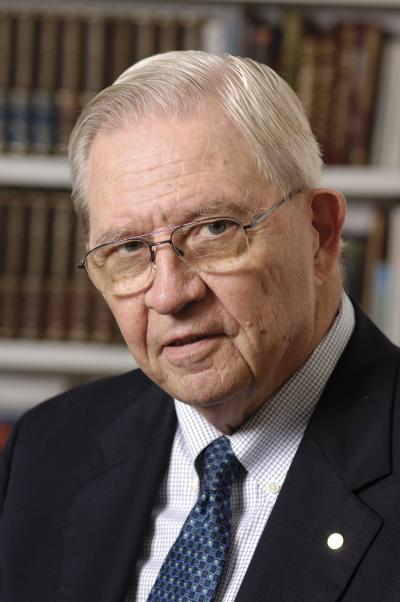
Dr. D. A. Henderson shares the inside story of 'the greatest scientific and humanitarian achievement of the past century'
For more than 3000 years, hundreds of millions of people have died or been left permanently scarred or blind by the relentless, incurable disease called smallpox. In 1967, Dr. D.A. Henderson became director of a worldwide campaign to eliminate this disease from the face of the Earth. SMALLPOX—THE DEATH OF A DISEASE: THE INSIDE STORY OF ERADICATING A WORLDWIDE KILLER (Prometheus Books, $27.98) is Dr. Henderson's personal story of how he led the World Health Organization's campaign to eradicate smallpox—the only disease in history to have been deliberately eliminated. Some have called this feat "the greatest scientific and humanitarian achievement of the past century."
In a lively, engrossing narrative—one that reaches audiences just as the World Health Organization has declared the Swine Flu a worldwide pandemic—Dr. Henderson explains that the massive international effort involved more than straightforward mass vaccination. He and his staff had to cope with civil wars, floods, impassable roads, and refugees as well as formidable bureaucratic and cultural obstacles, shortages of local health personnel and meager budgets. Countries across the world joined in the effort; the United States and the Soviet Union worked together through the darkest cold war days; and professionals from more than 70 nations served as WHO field staff. On October 26, 1976, the last case of smallpox occurred. The disease that annually had killed two million people or more had been vanquished–and in just over ten years.
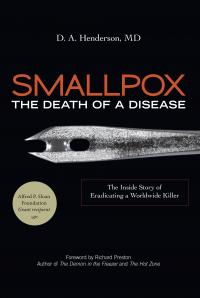
Dr. Henderson’s book "Smallpox- the Death of a Disease" is available at the University CO-OP!
He will be present at 3 book signings during the conference on April 7th in the Texas Union Ballroom!
2:30pm; 3:20pm and 6:30pm
"The eradication of smallpox was the greatest public health accomplishment of the twentieth century. But the lessons of the story—bureaucracies circumvented, Cold War rivalries overcome, local citizens mobilized—extend far beyond global health. D.A. Henderson's Smallpox—The Death of a Disease makes me optimistic about our future," said Elizabeth Fenn, author of Pox Americana: The Great Smallpox Epidemic of 1775-82, and Associate Professor of History, Duke University, Dr. Henderson also recounts in vivid detail the continuing struggle over whether to destroy the remaining virus in the two laboratories still that held it. Then came the startling discovery that the Soviet Union had been experimenting with smallpox virus as a biological weapon and producing it in large quantities. The threat of its possible use by a rogue nation or a terrorist has had to be taken seriously and Dr. Henderson has been a central figure in plans for coping with it. New methods for mass smallpox vaccination were so successful that he sought to expand the program of smallpox immunization to include polio, measles, whooping cough, diphtheria, and tetanus vaccines. That program now reaches more than four out of five children in the world and is eradicating poliomyelitis. This unique book is to be treasured—a personal and true story that proves that through cooperation and perseverance the most daunting of obstacles can be overcome.
"Thorough, balanced and well-crafted, [this] is the story of one of mankind's greatest achievements," said Tommy G. Thompson, Secretary of Health and Human Services (2001-2005) and Governor of Wisconsin (1987-2001). "The success of the eradication campaign is a testament to the difference the global public health community can make when it truly comes together for a common purpose. Whether one speaks of HIV/AIDS or Neglected Tropical Diseases, the solution lies in allies and adversaries working as one to alleviate suffering and save lives. This is the lesson to be drawn from Dr. Henderson's excellent book."
D.A. Henderson, M.D., is currently professor of medicine and public health at the University of Pittsburgh and a distinguished scholar at the Center for Biosecurity in Baltimore. He is a professor and former dean of the Johns Hopkins School of Public Health. He served as Life Sciences Adviser to President G. H. W. Bush and was the first director of the newly created Office of Public Health Emergency Preparedness in the Department of Health and Human Services. The recipient of the Presidential Medal of Freedom and the National Medal of Science plus many other awards, he has received the Japan Prize and has been knighted by the King of Thailand.
Photo Credit: Will Kirk, Johns Hopkins University
Related news release: Smallpox -- the death of a disease
Sponsors:
College of Natural Sciences: School of Biological Sciences, Career Services and Health Professions Office;University of Texas Libraries; The Centers for Disease Control and Prevention, Scientific Education and Professional Development Program Office; The Association of Schools of Public Health; The Association of Public Health Laboratories; The National Library of Medicine; Texas Department of State Health Services; Austin/Travis County Health and Human Services Department; The University of Texas School of Public Health.
This conference is generously supported under a cooperative agreement from The Centers for Disease Control and Prevention (CDC) through the Association of Schools of Public Health (ASPH).