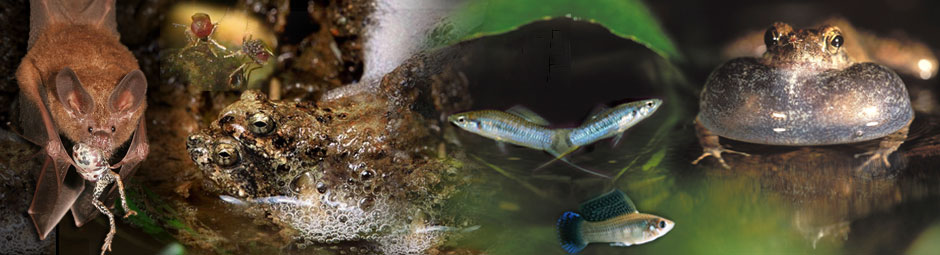
The Túngara Frog
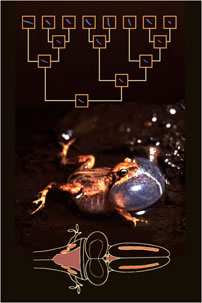 Sexual Selection and Communication in Physalaemus
pustulosus: This work was initiated by myself and
Dr. A. Stanley Rand. Stan was a staff scientist at the Smithsonian
Tropical Research Institute in Panama. He passed away in November 2005
(click here for his
obituary). Together with Dr. Walt Wilczynski (Georgia State University) and Dr. David Cannatella (University of Texas) we have been investigating the sexual communication
system of the túngara frog, Physalaemus pustulosus. Our approach is
multi-disciplinary addressing questions in three arenas of
investigation: brain, behavior and evolution Click here for a several page
synopsis of túngara frog research, for a more recent review article on tungara frogs, a "QuickGuide" (Current Biology) to the frogs, or for
more on the Túngara project.
Sexual Selection and Communication in Physalaemus
pustulosus: This work was initiated by myself and
Dr. A. Stanley Rand. Stan was a staff scientist at the Smithsonian
Tropical Research Institute in Panama. He passed away in November 2005
(click here for his
obituary). Together with Dr. Walt Wilczynski (Georgia State University) and Dr. David Cannatella (University of Texas) we have been investigating the sexual communication
system of the túngara frog, Physalaemus pustulosus. Our approach is
multi-disciplinary addressing questions in three arenas of
investigation: brain, behavior and evolution Click here for a several page
synopsis of túngara frog research, for a more recent review article on tungara frogs, a "QuickGuide" (Current Biology) to the frogs, or for
more on the Túngara project.
Holly Menino's book, Calls Beyond Our Hearing (2012, St. Martin's Press, NY) has a chapter dedicated to our tungara frog research. You can access that chapter from here to get a glimpse of what we do in Panama.
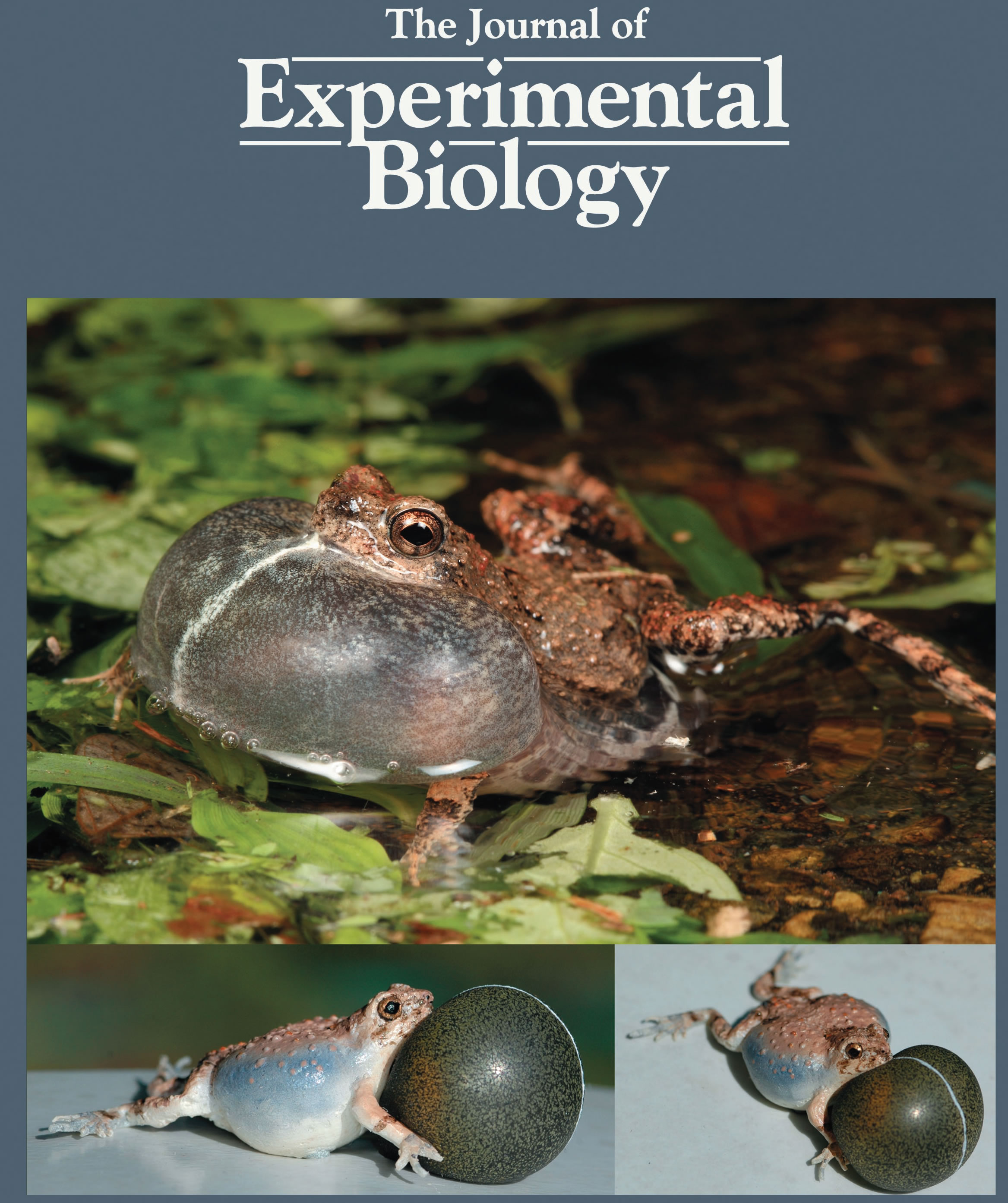 Studies with Dr. Ryan Taylor (Salisbury University) and colleagues utilize robotic frogs to gain insights into the imorptance of multimodal communication in sexual selection. Go to the multimedia page to see a video clip of the robofrogs in action.
Studies with Dr. Ham Farris (LSU Medical School) investigate various aspects of psychoacoustics in tungara frogs with emphasis on perceptual binding of the whine and the chuck, and on attempts to understand the general challenges of auditory scene analysis in a noisy environment.
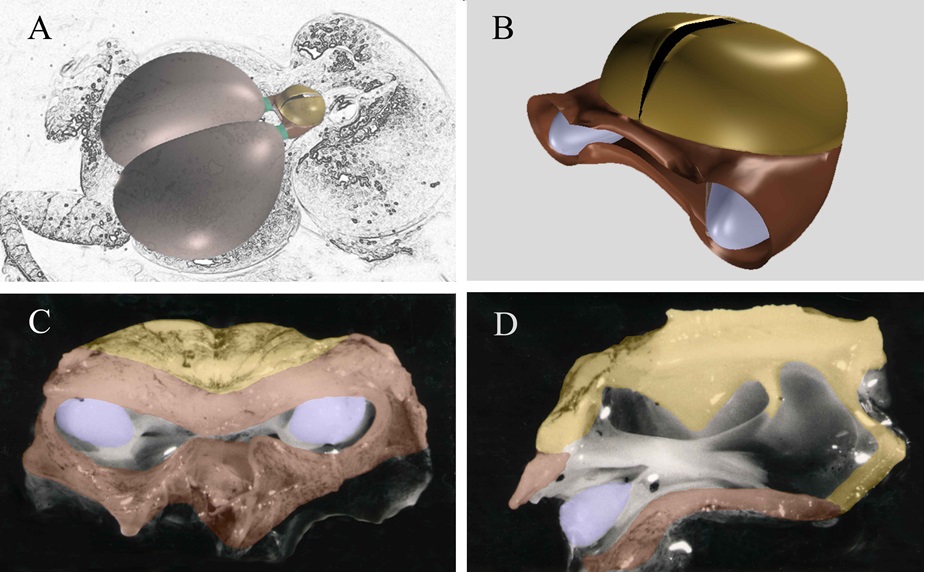 Together with Dr. Nikki Kime (Edgewood College) and Dr. Preston Wilson (Mechnical Engineering, Univ. Texas) we are developing analytical models of the anuran sound production system. Dr. Heidi Smith is exploring the molecular genetics of larynx development and the mophology of larynx ontogeny in a collaboration with Dr. John Wallingford (Dept. of Molecular Sciences, Univ. Texas).
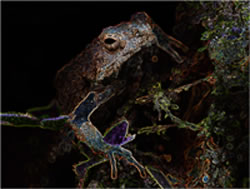
Multimedia. Videos & calls of this research for
download are posted on Multimedia page.
Undergrad Researchers. If you are a UT undergrad looking for lab experience, click here.
Interns and Assistants. Each summer (June to August
inclusive) we hire assistants. Click here if you are interested.
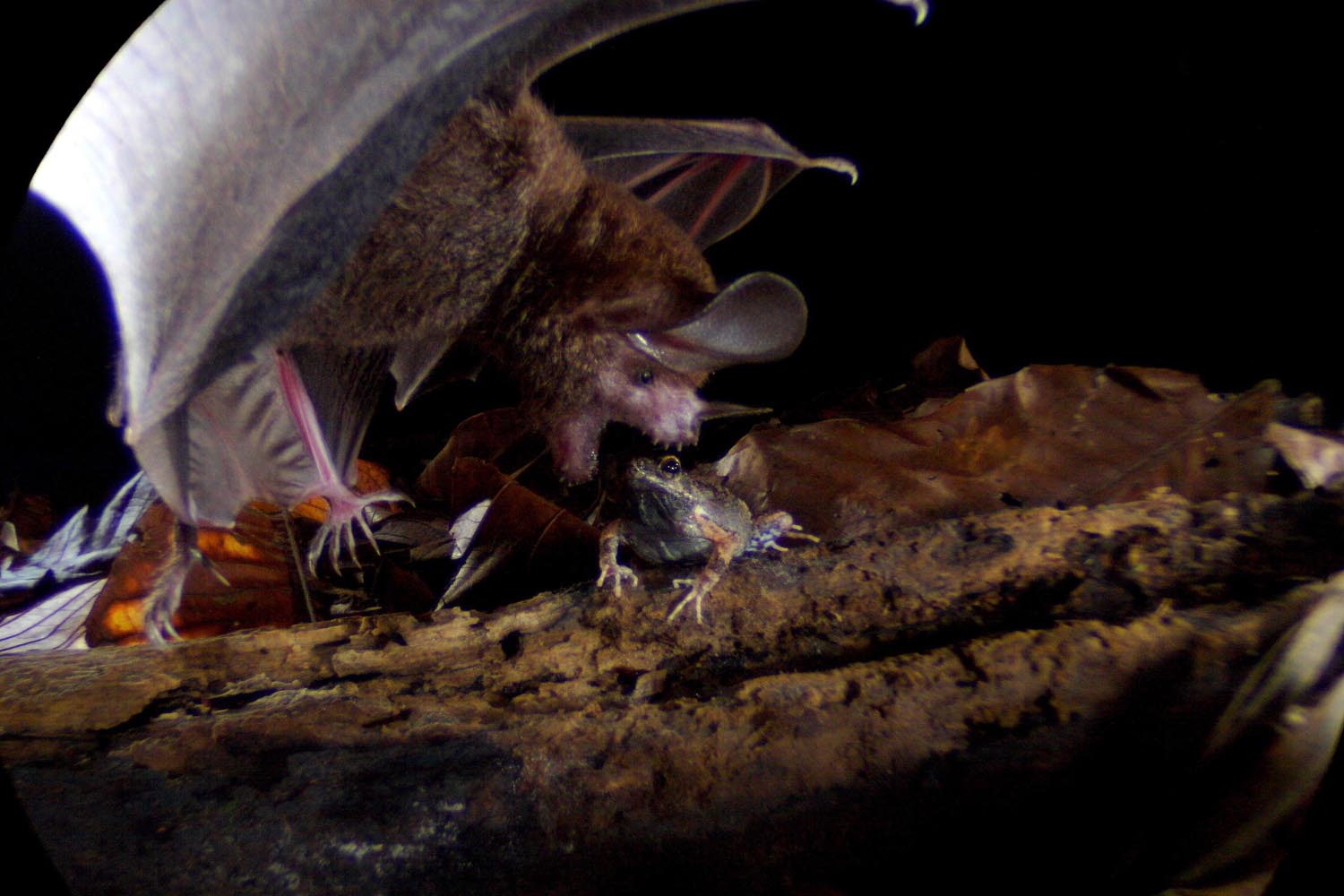
(photo by Alex Baugh)
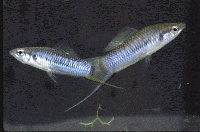
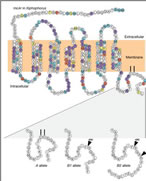 We recently identified the P gene as the melanocortin 4 receptor, and showed that: (i) there is copy number variation in mc4r, (ii) Y-linked alleles result in non-functional receptors, and (iii) there is a correlation between male size and copy number of Y-linked alleles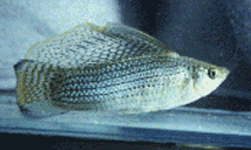
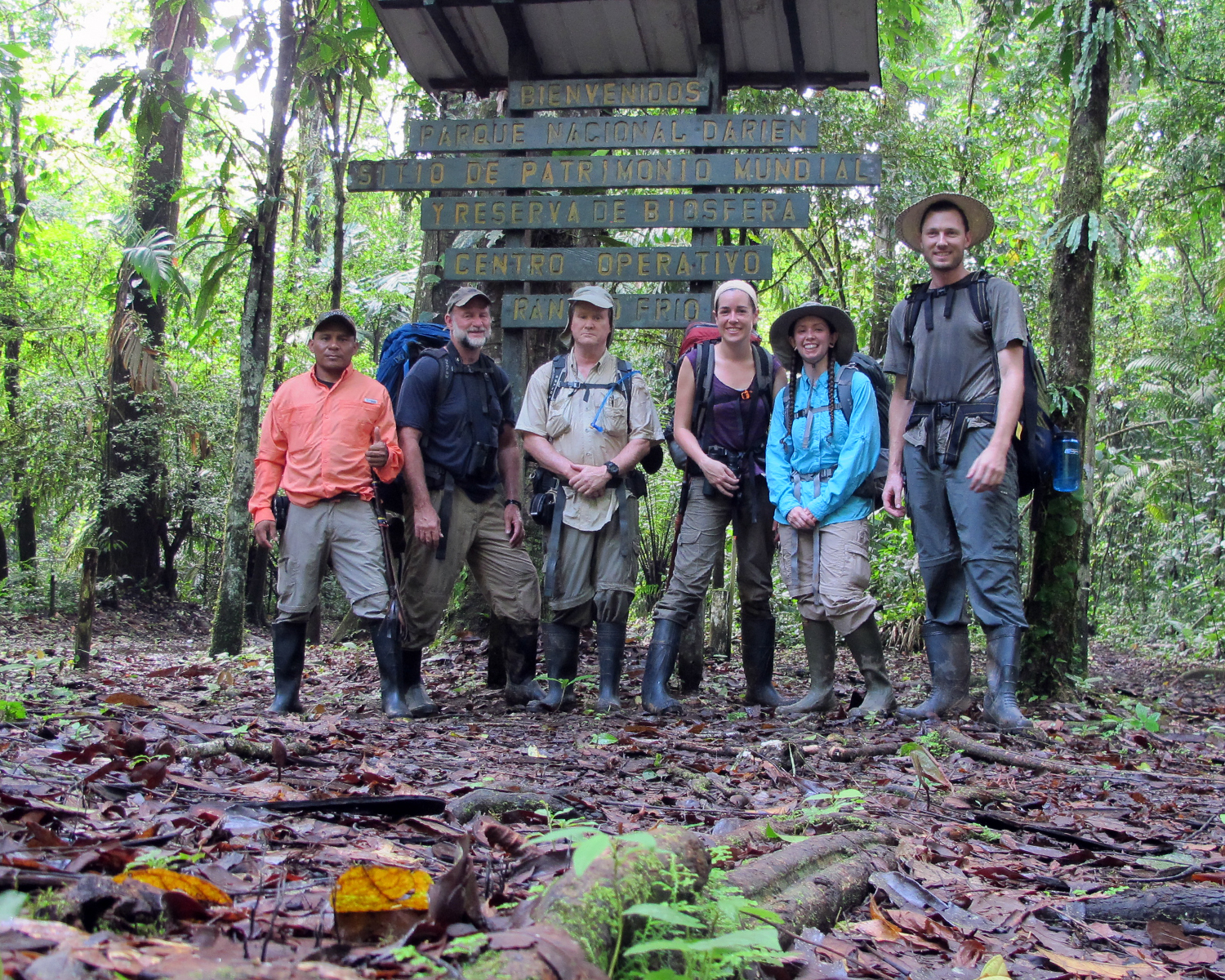 Sofia Rodriguez is studying the effect of the chytrid fungus (Bd) on the behavior and genetics of tungara frogs. As part of tracking the spread of chytrid she led an expedition into Darien Gap in summer 2014.